Backpack Sublimation Bundle: Graphics & Print Templates
As a blog designer who’s built over 200 editorial websites and managed visual content for digital publishers across lifestyle, education, and affiliate niches, I test every graphic design asset through one lens: Does it make real content look more trustworthy, clickable, and professionally cohesive? When I opened the Backpack Sublimation Bundle, my first thought wasn’t “cute” or “trendy”—it was “This has immediate editorial utility.”
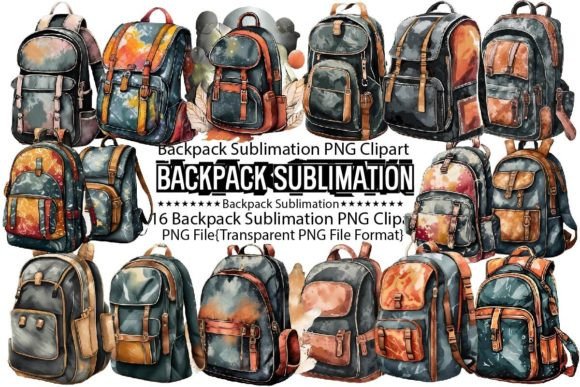
The bundle delivers 16 high-resolution (300 dpi) PNG files—each with a crisp transparent background—designed specifically for sublimation but equally powerful for digital publishing. The aesthetic leans into rugged, grounded energy: think tactical details, muted olive and charcoal palettes, subtle camo textures, and clean silhouette-based compositions. It’s not loud or cartoonish—it’s lifestyle-meets-functional: ideal for outdoor educators, military family bloggers, adventure affiliate sites, survivalist newsletters, or small business branding in gear, apparel, or preparedness niches. Readers instantly register authenticity—not costume, not cliché.
Where Backpack Sublimation Bundle Elevates Real Publishing Workflows
This isn’t just another set of clipart. It’s a modular visual system that slots seamlessly into live publishing contexts:
- Blog featured images—layered behind bold headline text to create strong visual hierarchy without competing with readability
- Pinterest pins—the clean outlines and contrast-rich silhouettes scale beautifully on vertical feeds and drive higher click-through rates
- Digital guides and lead magnets—used as cover accents, section dividers, or watermark-style backgrounds for worksheets and checklists
- Newsletter headers—especially effective in MailerLite or Beehiiv templates where a subtle, thematic graphic reinforces topic authority
- Category thumbnails—assign one unique backpack motif per content pillar (e.g., “Field Prep,” “Gear Reviews,” “Tactical Education”) to improve category recognition at a glance
- Canva templates—imported as layered PNGs to build reusable social media graphics, eBook covers, or media kit visuals with consistent brand texture
- Affiliate marketing visuals—paired with product comparison tables or “best gear” roundups to signal hands-on, field-tested credibility
Why It Builds Reader Trust—and Clicks
In content marketing, visual consistency is silent persuasion. The Backpack Sublimation Bundle supports that by offering variation within constraint: 16 distinct files, yet unified by line weight, proportion, and tonal harmony. That cohesion tells readers, “This site has intention behind its visuals—not random stock swaps.” That perception directly impacts bounce rate, time-on-page, and sharing behavior.
It also strengthens visual hierarchy without requiring advanced design skills. Drop any file behind a headline in Canva or WordPress, adjust opacity to 15–25%, and you’ve instantly elevated the perceived professionalism of your article header—no custom illustration needed. For digital product launches or downloadable resources, using one motif across your sales page, email sequence, and thank-you PDF builds unmistakable brand identity.
Best Places to Deploy These Graphics
These files shine brightest where thematic resonance meets functional clarity:
- Website header banners (with ample negative space for logo + navigation)
- Article thumbnails in grid layouts—especially when paired with bold sans-serif headlines
- Pinterest pin backgrounds (test with overlay text at 48px+ for mobile legibility)
- Editorial accents in long-form posts—think pull-quote borders or section transitions
- Content upgrades like printable packing lists or seasonal prep checklists
- Social media previews for new blog posts—adds instant niche signaling before the link is even clicked
Use With Intention—Not Everywhere
Like any strong graphic design asset, context matters. Avoid placing these in:
- Small mobile thumbnails (<120px wide)—fine detail gets lost; opt for simplified variants instead
- Text-dense blog graphics where the motif competes with body copy or captions
- Low-contrast website backgrounds (e.g., light gray on white) that mute the silhouette impact
- Busy layouts with multiple overlapping elements—these thrive in breathing room
- Serious corporate or medical content—this bundle’s energy reads “action-oriented,” not “boardroom-ready”
- Websites committed to ultra-minimalist visual systems (e.g., heavy whitespace + single-color accents)
Publisher Notes You’ll Actually Use
Before dropping these into production, run these quick checks:
- Preview each file at actual size inside your CMS—some motifs read stronger than others in thumbnail view
- Test contrast: place over your site’s primary background color and verify headline text remains WCAG-compliant
- Try black-and-white conversion—do shapes hold up? (They do—great for printables or monochrome themes)
- Pair with your brand fonts: they work especially well beside geometric sans-serifs (like Inter or Montserrat), but avoid delicate script or thin serifs unless intentionally contrasting
- Compress PNGs with TinyPNG or Squoosh—originals are print-ready, but web performance demands optimization
- Confirm commercial license terms—yes, this is a commercial design asset, fully cleared for monetized blogs, affiliate pages, and paid digital downloads
Bottom line: the Backpack Sublimation Bundle isn’t just another creative marketplace download. It’s a focused, production-ready toolkit for bloggers and digital publishers who understand that editorial design is content strategy in visual form. Whether you’re building a niche newsletter, launching a digital guide, or refreshing your entire blog graphics library, these 16 files deliver measurable lift—not just decoration. They help your audience see your authority before they read your first sentence.
And yes—Thank you for your attention to my product Backpack Sublimation Bundle military for your inspiration. You will receive ✅ 16 Backpack Sublimation Bundle File 300 dpi PNG files on a transparent backgrou—but now you know exactly how, where, and why each one earns its place in your real-world publishing workflow.